
Why Your Dog Won’t Come Back When Called | Recall Training Tips UK
Why Your Dog Still Has No Recall (Even After Training)
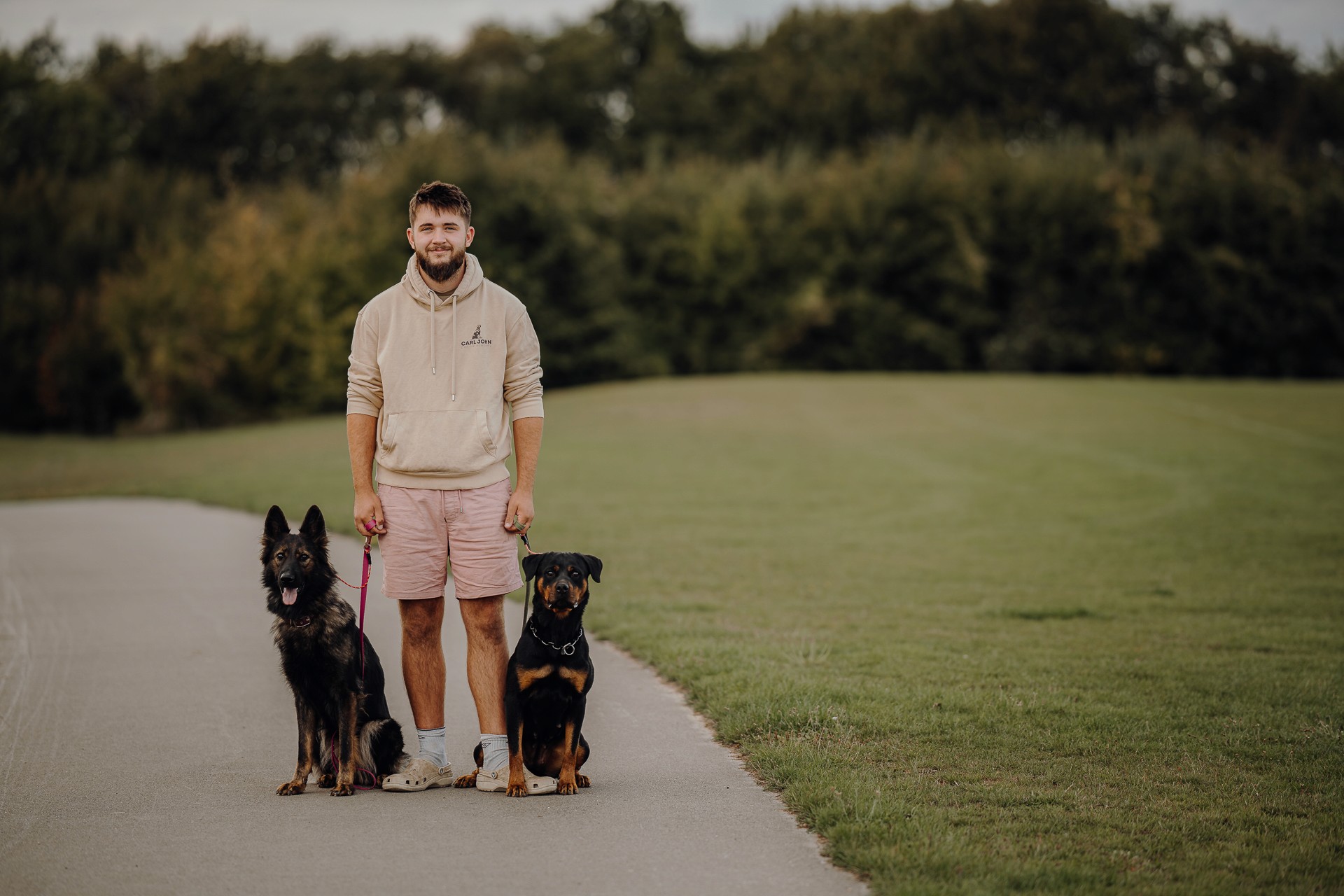
Recall is one of the most common things I get asked about as a dog trainer, and it nearly always comes with a bit of frustration behind it. I’ll hear things like “they come back… until there’s another dog”, “they were amazing as a puppy”, or “it’s like their ears just switch off.”
If that sounds familiar, you’re not alone. It also doesn’t mean your dog can’t do recall, it usually just means there are a couple of key pieces missing that people don’t realise matter as much as they do.
There are two big areas I see time and time again when recall isn’t reliable.
Firstly, Motivation & Relationship
I’ll be honest with you, most dogs ignore recall because the environment is more rewarding than their owner, it’s not stubbornness, it’s just a case of value. Other dogs, smells, movement, wildlife… all of that is far more exciting than you calling them back.
If your dog doesn’t see you as part of the fun, there’s no real reason for them to choose you in those moments.
This is where people often focus too much on the command itself, instead of what’s behind it. A solid recall comes from a dog that’s genuinely motivated to come back and stay engaged with you, not one that’s just been told what to do.
Building that looks like:
Creating real engagement through play and interaction
Using food in a way that builds drive, not just compliance
Introducing chase games and movement so you become part of the action
Rewarding your dog for choosing you, not just responding to you
When you get this right, you stop competing with the environment and start becoming more relevant within it.
Secondly, Word Confusion
The other thing I see constantly is dogs being unintentionally confused by inconsistent cues.
One minute it’s “Fido, come,” then it’s “here,” then “come on,” then “this way,” then “get over here.” To us, it all means the same thing, but to your dog, those are completely different signals.
Dogs rely on clarity and repetition to understand what’s being asked of them, If the cue keeps changing, the meaning becomes weaker, and recall starts to break down.
Keeping it simple makes a huge difference:
Pick one recall word and stick to it
Use it consistently, not just when you’re desperate for them to come back
Reinforce it clearly so the dog builds a strong association with that cue
It sounds basic, but this alone can clean up a lot of unreliable recall.
Why Recall Still Breaks Down (Even When They “Know It”)
Even when a dog understands recall, the environment is always changing, and that’s where things start to fall apart. Higher distractions bring higher difficulty, and if the foundations aren’t solid enough, the dog will default to whatever feels most rewarding in that moment.
That’s why recall isn’t just about teaching a command, it’s about building three key things together:
Motivation, your dog wants to come back
Clarity, your dog understands exactly what’s being asked
Accountability, your dog knows they need to follow through
That last part is the one most people avoid or miss entirely, a reliable recall isn’t just optional for your dog, it has to become something they follow through on every time, not just when it suits them.
If your dog only comes back when they feel like it, it’s usually not a recall issue on its own. It’s a gap in motivation, clarity, or both and once you fix those properly, recall starts to fall into place a lot more naturally.